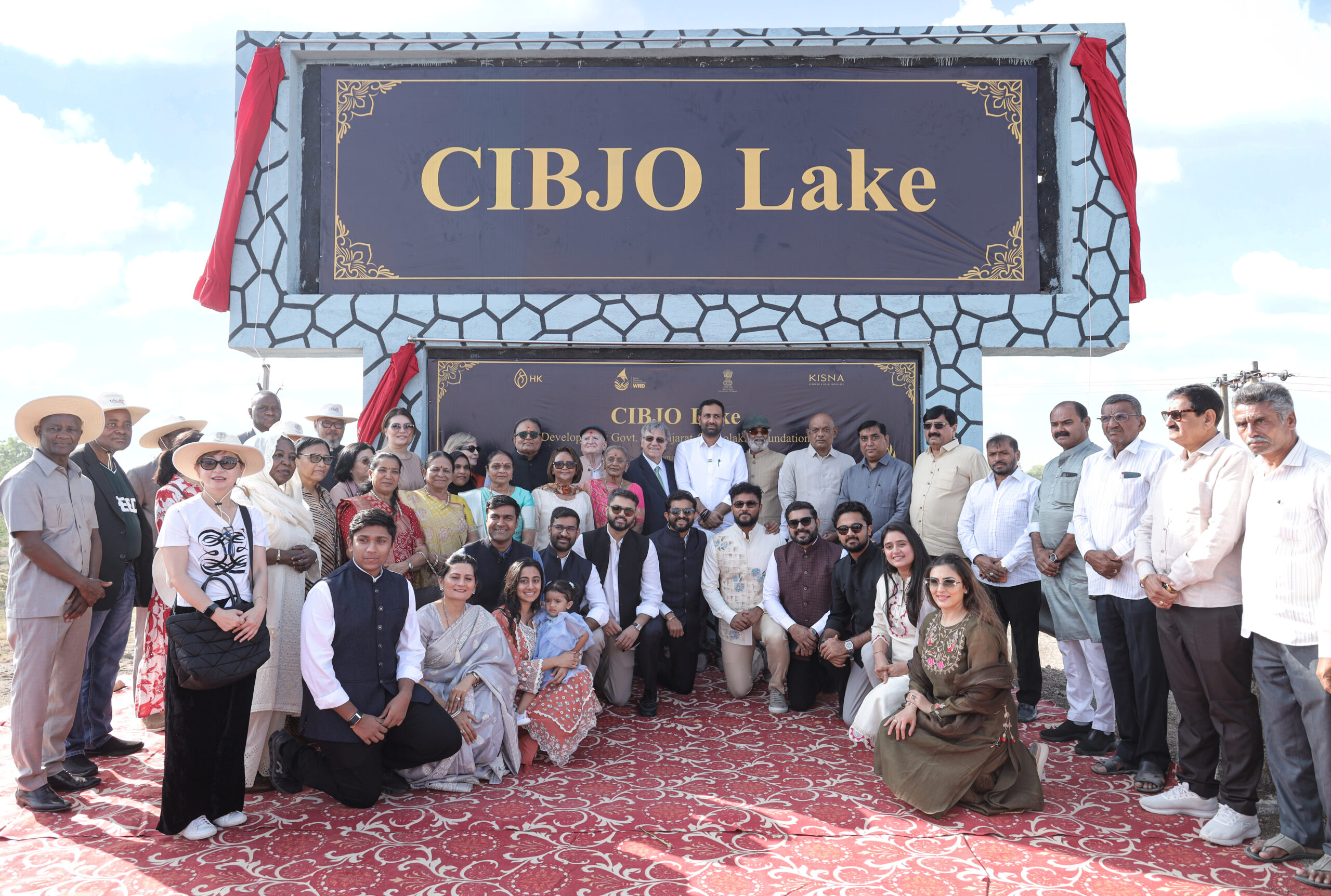
1 April, Amreli, Gujarat – In a significant step towards sustainable rural development and environmental restoration, the Dholakia Foundation, in collaboration with the Government of Gujarat, initiated a large-scale River Rejuvenation and Deepening Project in Lathi taluka of Amreli district.
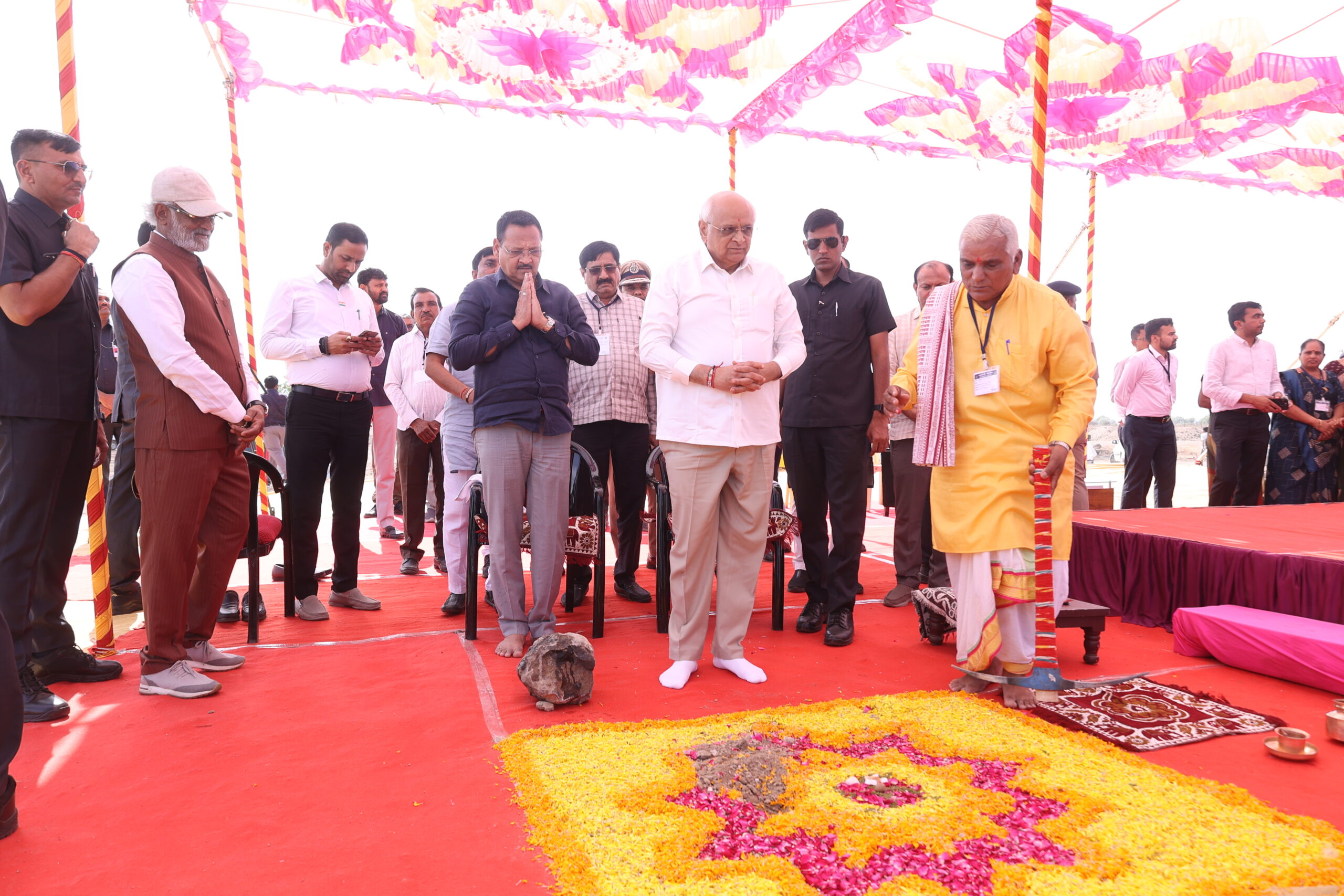
At Matirala, under the Pipariya River Deepening Project, the Honorable Chief Minister Bhupendra Patel inaugurated a major program aimed at deepening and widening the river stretch. The project included 7,740 meters from Matirala to Krishnagadh and 1,860 meters from Kerala to Krishnagadh, covering a total of 9.6 kilometers of river area.
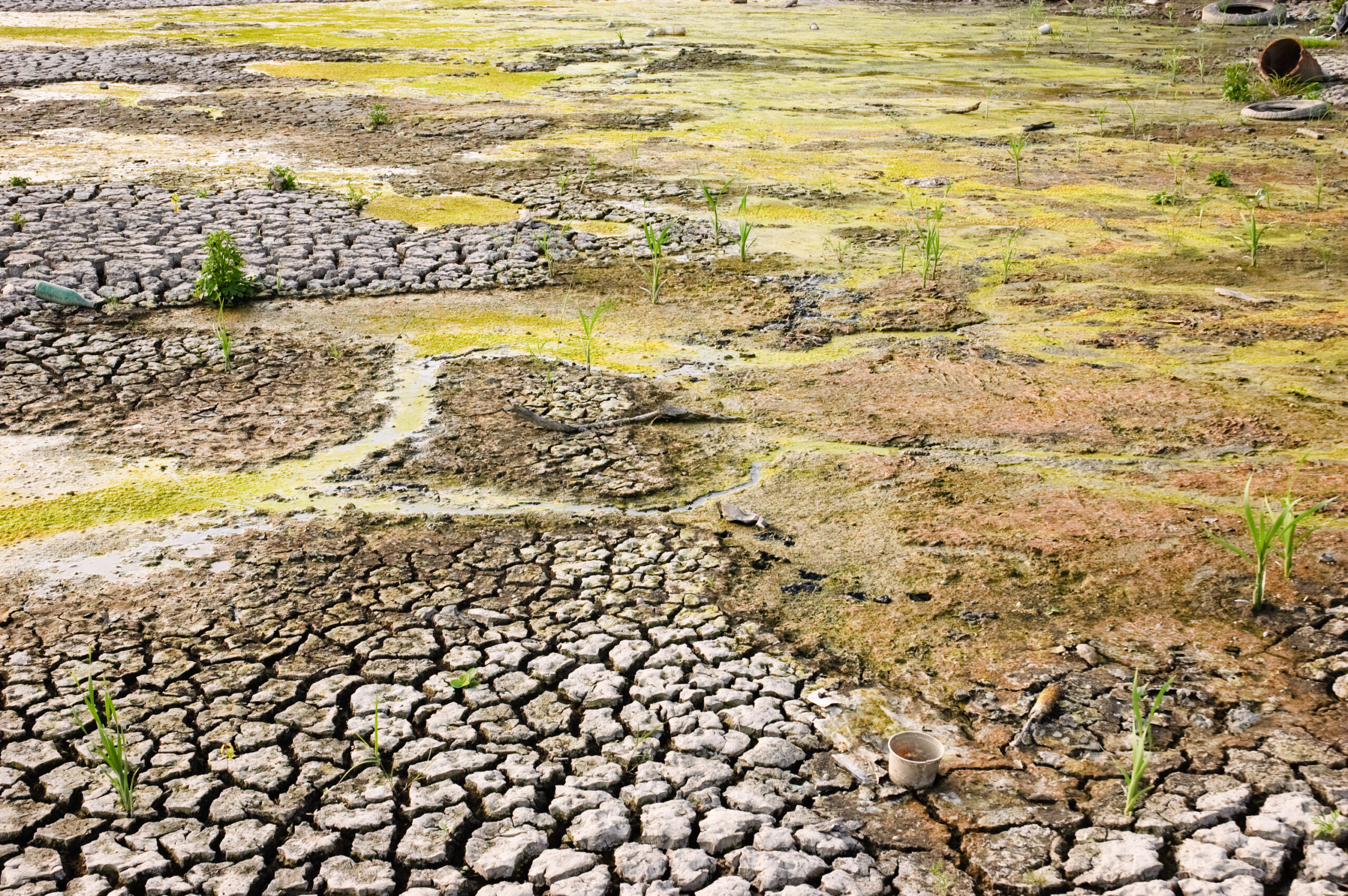
This river, flowing through Malviya Pipariya, Matirala, and Krishnagadh villages, had once been considered the lifeline of the region. However, over the past several years, it had completely dried up, with its bed heavily encroached by the invasive species Prosopis juliflora (wild babul).
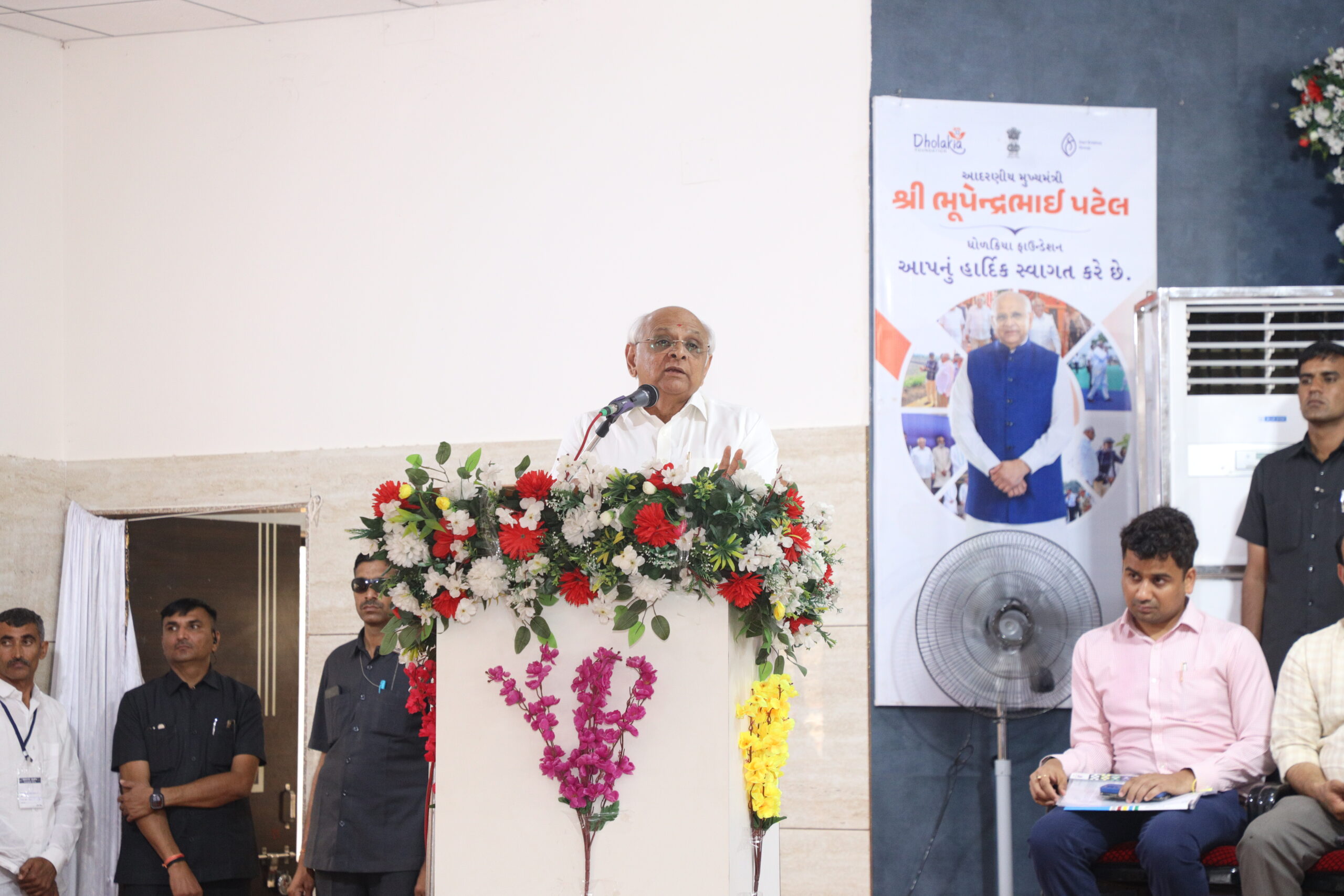
Honourable Chief Minister Bhupendra Patel stated:
“Water should be used like a sacred offering and only as per necessity. Initiatives like ‘Amrit Sarovar’ have been launched to ensure that every drop of rainwater is conserved, so that water remains within the village and continuous efforts toward water conservation can be sustained.”
The prolonged water scarcity had led to declining agricultural productivity, adversely impacted livestock farming, reduced groundwater levels, and created severe drinking water challenges, with water sources becoming scarce and saline.
Dignitaries and Leadership
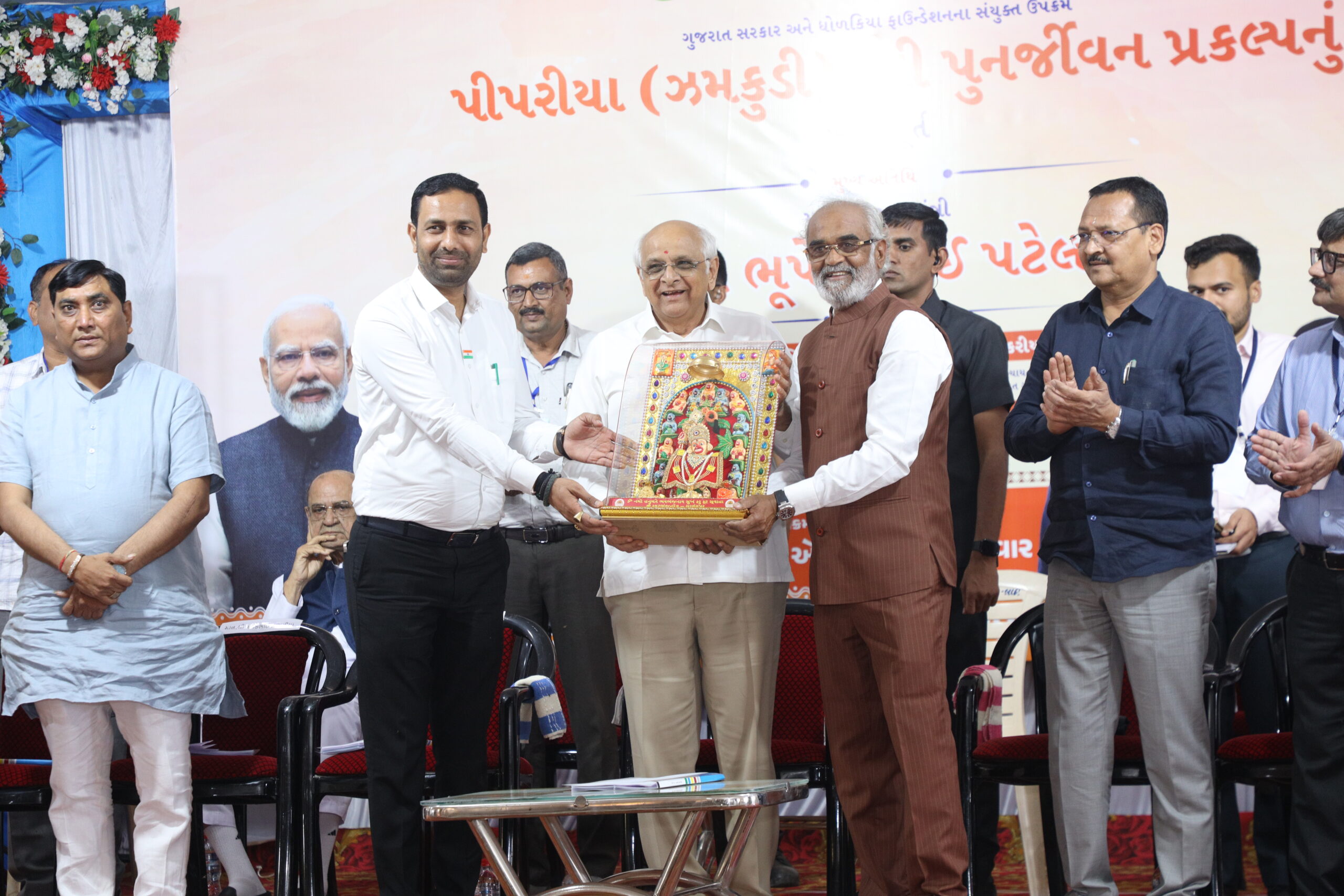
The inauguration and associated programs were attended by key dignitaries, including:
- Ishwarsinh Patel, State Minister for Water Supply and Water Resources
- Kaushikbhai Vekariya, Minister of State for Energy and Petrochemicals, Law and Justice, Legislative and Parliamentary Affairs
- Bharatbhai Sutariya, Member of Parliament
Project Scope and Implementation
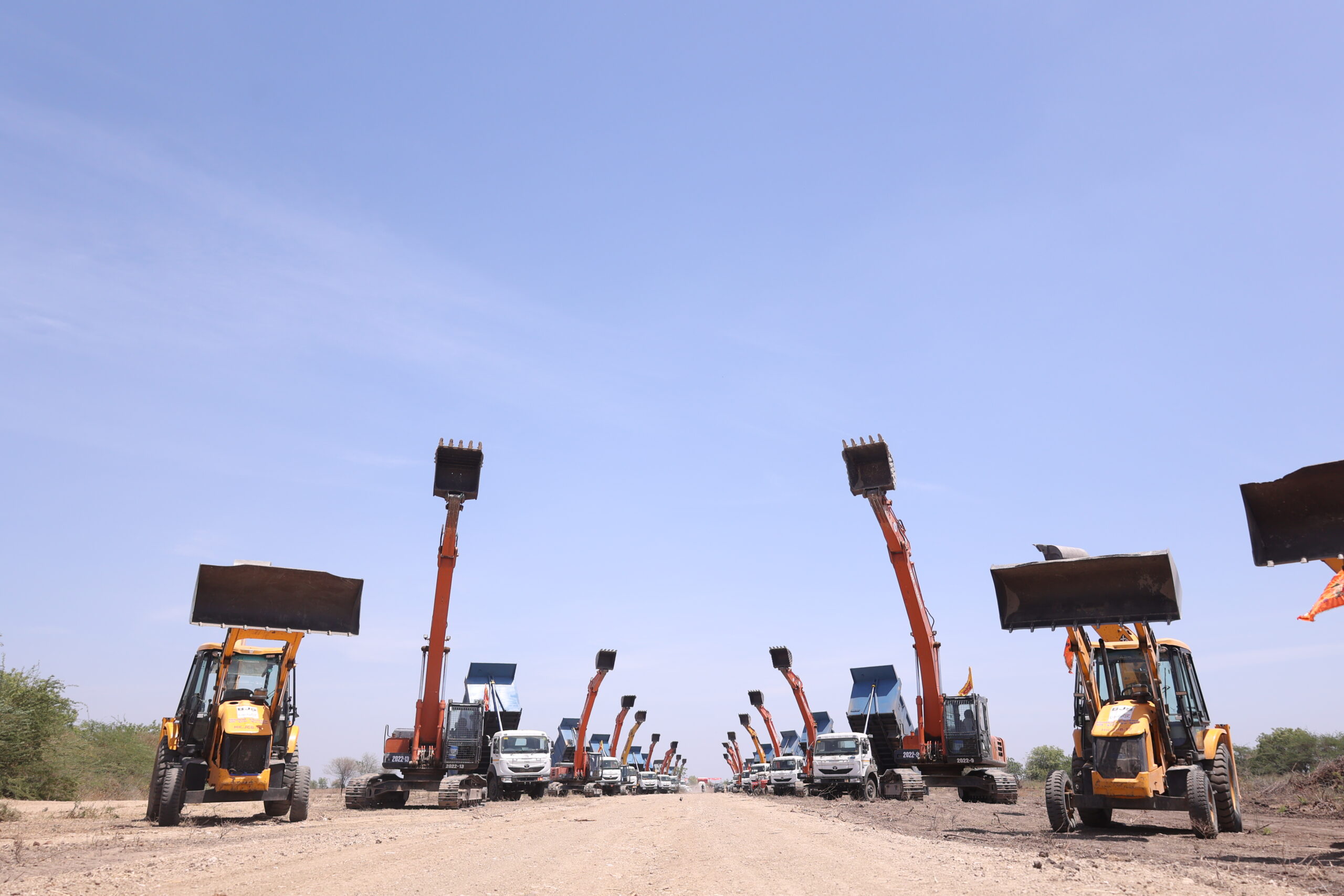
Under this ambitious initiative, the river is being restored through scientifically planned interventions, including the removal of invasive babul vegetation, desilting and deepening, river widening, and cleaning using advanced machinery. Native tree plantation, construction of check dams, and catchment area development are also being carried out to enhance water conservation and groundwater recharge.
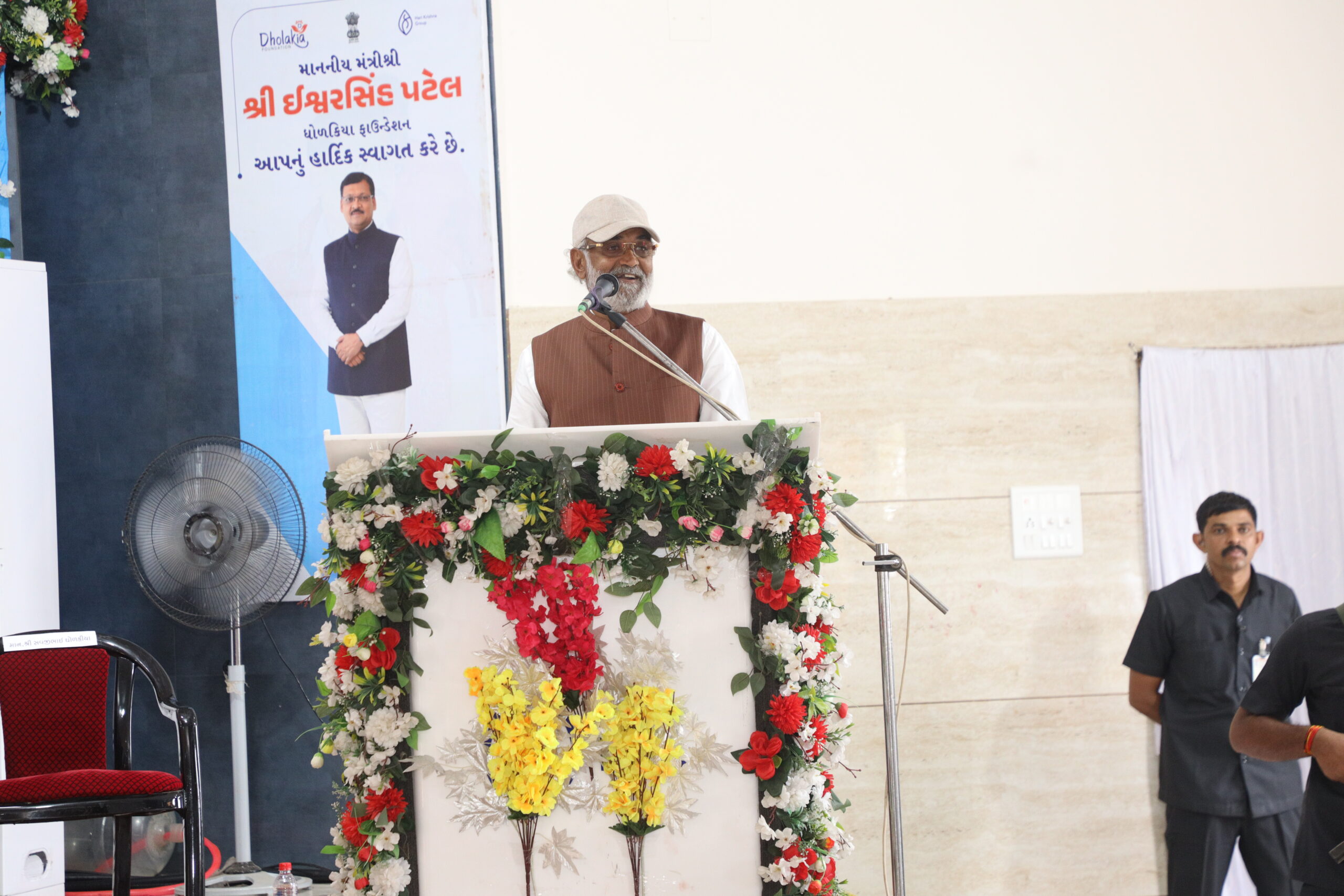
The project follows an 80:20 public participation model in partnership with the Government of Gujarat, with in-principle approval of ₹15.66 crore and administrative approval in process for ₹15.70 crore.
Savjibhai Dholakia reaffirmed the commitment, stating,
“We aim to complete the project within four months. Once finished, the river will be revived, and we will invite everyone to the inauguration.”
Community Participation and Local Impact
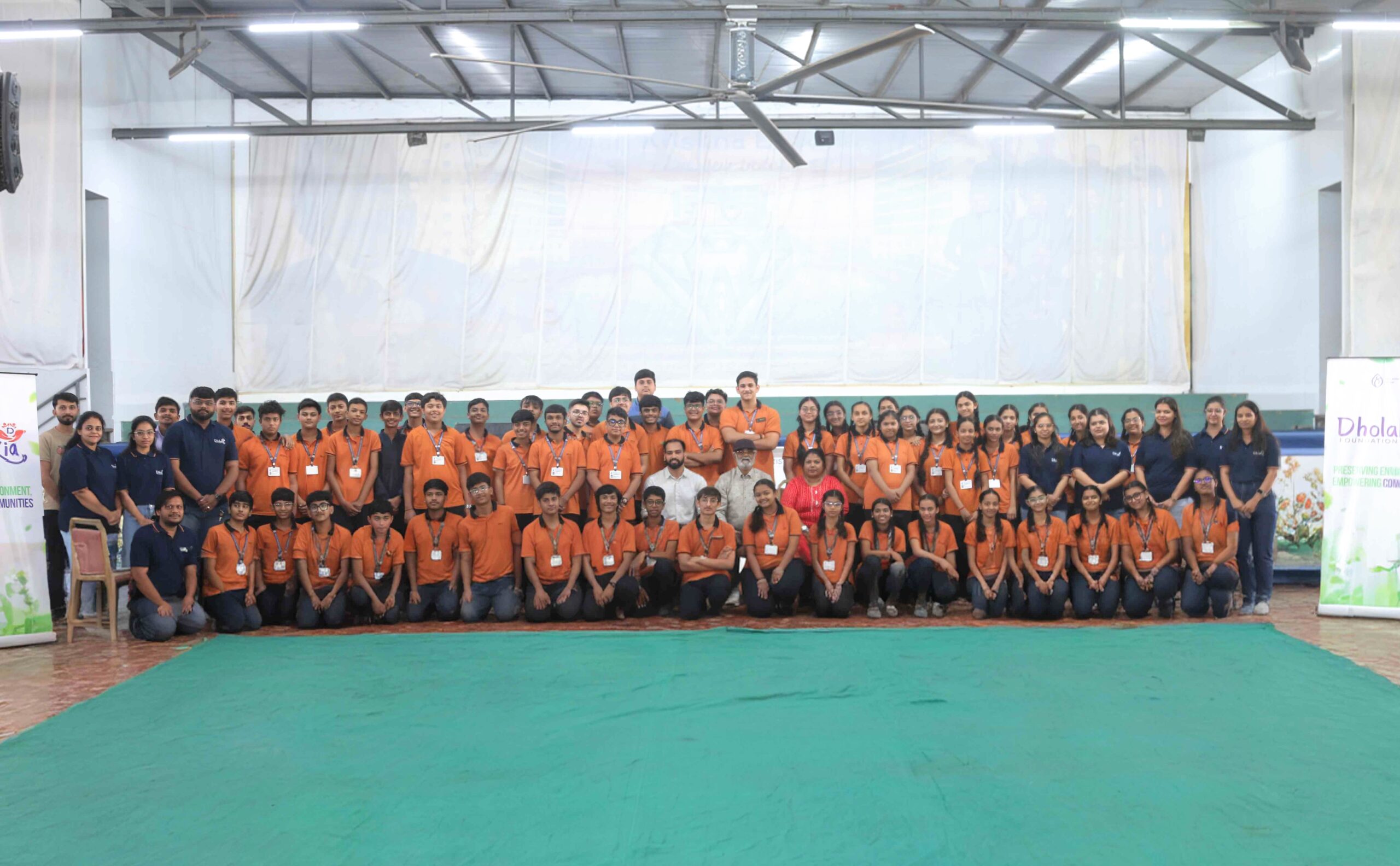
A key highlight of the initiative was the active involvement of local communities. Through shramdaan (voluntary labor) and awareness programs on water conservation, villagers were encouraged to take ownership of the project.
A local farmer expressed optimism about the initiative, stating:
“If the river flows again, our fields will turn green once more. We won’t have to migrate elsewhere for employment.”
Expected Outcomes
The project is expected to deliver long-term socio-economic and environmental benefits, including improved groundwater levels, enhanced agricultural productivity, stronger livestock farming, local employment generation, and restoration of ecological balance. Experts believe such initiatives play a vital role in both environmental conservation and rural development.
A Vision for Sustainable Development
Aligned with Gujarat’s vision of “Sauno Saath, Sauno Vikas,” the initiative aims to accelerate growth in the Amreli district. Beyond river restoration, it represents stronger livelihoods, empowered communities, and a sustainable future.
The Dholakia Foundation has also encouraged active participation from citizens and stakeholders in this transformative effort.
About Dholakia Foundation
The Dholakia Foundation, the philanthropic arm of Hari Krishna Exports Pvt. Ltd., was established in 1996 by Savjibhai Dholakia along with Himmat, Tulsi, and Ghanshyam Dholakia. Focused on ecosystem restoration, water conservation, and community empowerment, Dholakia Foundation is an active contributor to the United Nations Sustainable Development Goals and a recognised actor of the UN Decade on Ecosystem Restoration. Through initiatives like Mission River and Mission 102030, the Foundation has restored over 170 water bodies, conserved more than 37 billion litres of water, and planted over 3.7 million trees, significantly improving groundwater levels, agricultural resilience, and biodiversity in drought-prone regions.